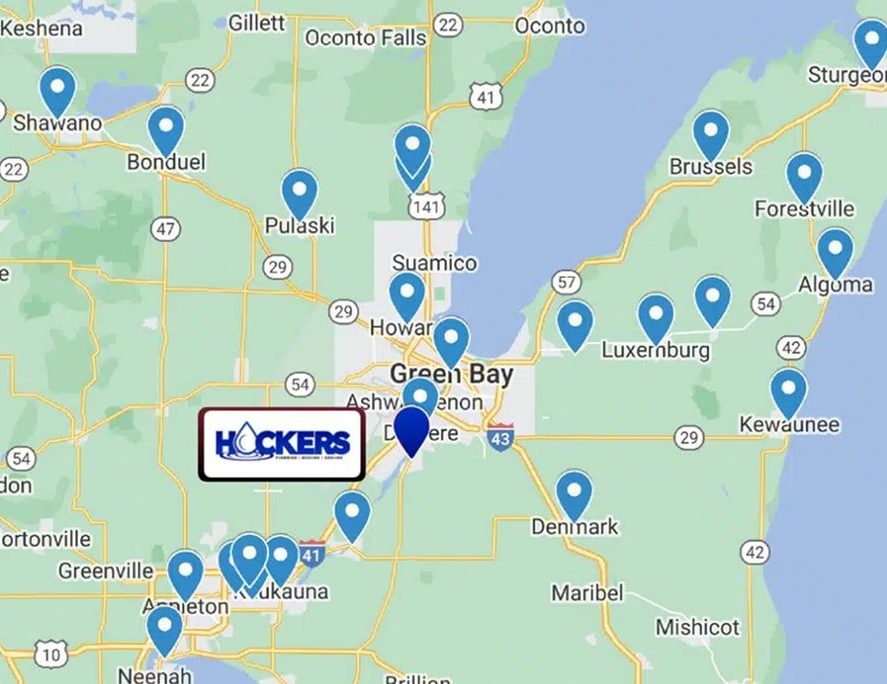


Hockers Home Services is proud to serve De Pere, Green Bay, and Northeast Wisconsin homeowners with reliable plumbing, heating, and cooling solutions designed to keep Wisconsin homes comfortable year-round.
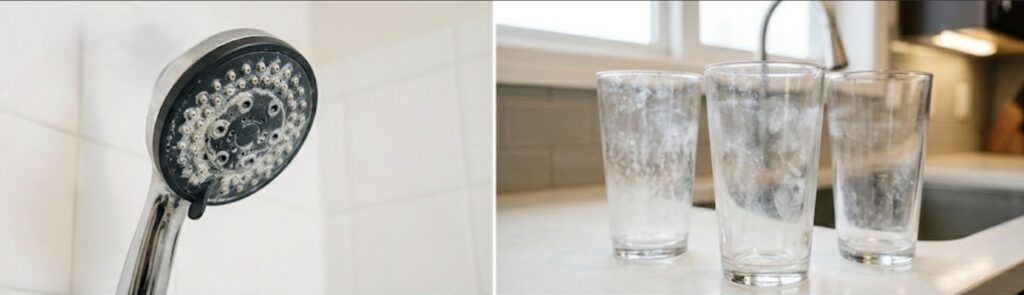
Hard water is one of those household problems that often feels normal in Wisconsin. You may notice cloudy spots on dishes, crusty buildup around faucets, dry-feeling skin after showers, or a water heater that seems to work harder than it should. But hard water does not only affect what you can see. Over time, it can also contribute to mineral buildup inside plumbing fixtures, appliances, and drain pathways.
If your drains seem slower than they used to be, hard water may be part of the story.
Need help fast? Contact Hockers, your trusted Wisconsin home comfort experts.
What Is Hard Water?
Hard water contains higher levels of dissolved minerals, especially calcium and magnesium. These minerals naturally enter groundwater as water moves through rock and soil. Water hardness is not usually considered a health hazard, but it can create frustrating plumbing problems inside a home.
The Madison Metropolitan Sewerage District explains that hardness refers to the amount of calcium and magnesium compounds dissolved in water, and that these minerals naturally occur in groundwater. The U.S. Geological Survey has also documented Wisconsin groundwater quality data related to hardness, calcium, magnesium, alkalinity, and dissolved solids.
In practical terms, hard water means minerals can be left behind wherever water flows, heats, evaporates, or sits.
How Does Hard Water Affect Your Plumbing?
Hard water leaves mineral deposits behind. These deposits are often called scale. You can see scale around faucets, showerheads, and aerators, but similar buildup can also happen where you cannot see it.
Hard water can affect:
- Faucet aerators
- Showerheads
- Water heaters
- Dishwashers
- Washing machines
- Toilet components
- Supply lines
- Drain assemblies
- Pipe interiors
- Fixtures and valves
Mineral deposits do not usually block a drain overnight. Instead, they gradually roughen surfaces and narrow openings. That makes it easier for soap scum, hair, grease, and debris to cling inside the drain system.
Can Hard Water Really Narrow Drains?
Yes, but usually as part of a larger buildup problem.
Hard water minerals can combine with soap, shampoo, grease, and organic debris to create stubborn residue. In bathroom drains, minerals may mix with soap scum and hair. In kitchen drains, they may mix with grease and food particles. In laundry areas, minerals can interact with detergents and fabric residue.
Over time, this buildup can reduce the usable space inside drainpipes and fixture traps. You may not notice it until the water starts draining slowly.
What Are the Signs of Hard Water Buildup?
Wisconsin homeowners should watch for these signs:
- White or chalky crust around faucets
- Showerheads spraying unevenly
- Cloudy spots on glassware
- Soap that does not lather well
- Dry-feeling skin or hair after bathing
- Slow bathroom sink drains
- Slow tub or shower drains
- Frequent faucet aerator clogs
- Reduced water pressure at fixtures
- Water heater performance issues
- Appliances wearing out sooner than expected
One symptom alone does not prove hard water is the only cause. But if you see several of these signs together, it is worth having your plumbing checked.
Why Are Bathroom Drains So Vulnerable?
Bathroom drains deal with a difficult mix of materials. Every day, they carry soap, toothpaste, shaving cream, hair, skin oils, lotions, and minerals from water.
Hard water can make soap residue more stubborn. Instead of rinsing away cleanly, soap and minerals can form sticky buildup along pipe walls and drain assemblies. Hair then catches on that buildup, creating a clog that grows slowly over time.
Common bathroom warning signs include:
- Water pooling around your feet in the shower
- Sink drains that gurgle or empty slowly
- Frequent clogs after shaving or grooming
- Odors coming from sink or tub drains
- Showerheads with crusted mineral deposits
If you keep clearing the same bathroom drain again and again, the issue may be deeper than the visible drain opening.
Why Are Kitchen Drains Also at Risk?
Kitchen drains are already prone to grease, fats, oils, food particles, and dish soap residue. Hard water can add mineral scale to that mix, creating a rougher surface inside the drain line.
Even if you are careful, small amounts of grease and food residue can enter the drain. When those materials meet mineral deposits, they may cling more easily and build into a clog.
To protect your kitchen drain:
- Wipe grease from pans before washing.
- Throw food scraps in the trash or compost.
- Avoid pouring cooking oil down the sink.
- Use strainers to catch debris.
- Run hot water after washing greasy dishes.
- Schedule professional drain cleaning if clogs keep returning.
What About Water Heaters?
Hard water can be especially hard on water heaters because heat causes minerals to separate from the water more readily. Those minerals can settle as sediment inside the tank or contribute to scale in the system.
Possible signs of hard water stress on a water heater include:
- Rumbling or popping noises
- Inconsistent hot water
- Reduced efficiency
- Longer recovery times
- Cloudy or discolored hot water
- Shorter equipment lifespan
Hockers provides water heater repair and replacement services for homeowners throughout De Pere, Green Bay, and Northeast Wisconsin. If your water heater is struggling, the team can inspect the system and explain your options clearly.
What Can Homeowners Do About Hard Water?
You do not have to accept hard water damage as unavoidable. The right approach depends on your home, your plumbing, and the severity of the symptoms.
Start with these steps:
- Clean faucet aerators regularly.
- Remove mineral buildup from showerheads.
- Avoid chemical drain cleaners.
- Keep grease out of drains.
- Use drain strainers in sinks, tubs, and showers.
- Schedule professional drain cleaning for recurring clogs.
- Ask about water treatment options if hard water symptoms are widespread.
- Have your water heater inspected if hot water performance drops.
A professional plumber can help determine whether your issue is a fixture problem, a localized drain clog, a water heater concern, or a whole-home water quality issue.
Schedule service with Hockers Home Services and experience five-star comfort care.
Why Should You Avoid Chemical Drain Cleaners?
Chemical drain cleaners may seem convenient, but they are not a long-term solution for mineral-related buildup. They can be harsh on older pipes, unpleasant to handle, and ineffective against many stubborn clogs.
They also do not diagnose the cause. A drain may slow down because of mineral scale, grease, roots, pipe slope, a blocked vent, or a main line issue. Pouring chemicals into the drain does not tell you which problem you have.
Hockers uses professional tools and experience to find the right solution instead of guessing.
When Do You Need Professional Drain Cleaning?
Call a professional if you notice:
- Repeated clogs in the same drain
- Multiple slow drains at once
- Bad odors from drains
- Gurgling sounds
- Water backing up into another fixture
- Slow drains despite regular cleaning
- Standing water in tubs, showers, or sinks
- Signs of sewer line trouble
Professional drain cleaning removes buildup more thoroughly than store-bought products. If needed, Hockers can also recommend camera inspection to see what is happening inside the line.
Can Water Treatment Help?
In many homes, water treatment can help reduce hard water symptoms. A water softener or other treatment system may help protect fixtures, appliances, and plumbing components from ongoing mineral buildup.
Not every home needs the same solution. Water quality, household size, plumbing age, and homeowner goals all matter. Hockers can help you understand what makes sense for your Northeast Wisconsin home.
How Hockers Helps Wisconsin Homeowners
Hockers Home Services brings friendly, local plumbing expertise to homes across De Pere, Green Bay, Ashwaubenon, Howard, and surrounding Brown County communities. Whether you are dealing with slow drains, hard water symptoms, water heater concerns, or fixture issues, Hockers provides practical recommendations and dependable workmanship.
The team can help with:
- Drain cleaning
- Leak detection
- Water heater repair and replacement
- Fixture installation
- Repiping
- Plumbing repair
- Water quality concerns
- Preventive maintenance
As a local, family-owned company, Hockers understands the plumbing challenges that come with Wisconsin homes, seasons, and water conditions.
Frequently Asked Questions About Hard Water and Drains
Is hard water dangerous?
Hard water is generally not considered dangerous to drink, but it can be frustrating for plumbing, fixtures, appliances, cleaning, and comfort.
Can hard water clog pipes?
Hard water can contribute to mineral scale and buildup. In drains, it often combines with soap scum, hair, grease, and debris, making clogs more likely over time.
Will drain cleaning remove hard water buildup?
Professional drain cleaning can remove many types of buildup, but the best solution depends on the condition of the pipe and the cause of the clog. A plumber can inspect the situation and recommend the right next step.
Should I consider a water softener?
If you have widespread hard water symptoms, a water treatment system may help. Hockers can help evaluate your plumbing concerns and guide you toward practical options.
Stop Hard Water From Becoming a Bigger Plumbing Problem
Hard water does not usually announce itself with one big failure. It works slowly, leaving behind minerals, scale, residue, and wear. By the time drains slow down or fixtures stop working properly, buildup may already be affecting your plumbing system.
Call Hockers Home Services today for reliable plumbing service in De Pere, Green Bay, and Northeast Wisconsin. From drain cleaning to water heater service and fixture repairs, Hockers is ready to help you protect your home from the hidden effects of hard water.
Hockers Plumbing, Heating, Cooling, & Electrical is proud to offer financing options through Ally!
We understand the wide variety of financial circumstances, and are proud to offer financing options in order to keep your home comfortable, starting today.
LEARN MORE