

Hockers Home Services is proud to help De Pere and Green Bay area homeowners make smart decisions about their plumbing systems, including their water softeners. If your softener has been acting up lately, you may be wondering whether it makes more sense to repair it or replace it entirely. The honest answer depends on a few key factors, and understanding them can save you both money and frustration.
In Northeast Wisconsin, water softeners aren’t a luxury, they’re a practical necessity. Our region is known for hard water, which means high concentrations of calcium and magnesium that can wreak havoc on pipes, appliances, and fixtures over time. A working water softener protects your entire plumbing system. When it breaks down, getting it fixed, or replaced, quickly is important.
Call Hockers Home Services today for expert water softener repair and replacement services in De Pere, Green Bay, and the surrounding Northeast Wisconsin area.
How Does a Water Softener Work and What Can Go Wrong?
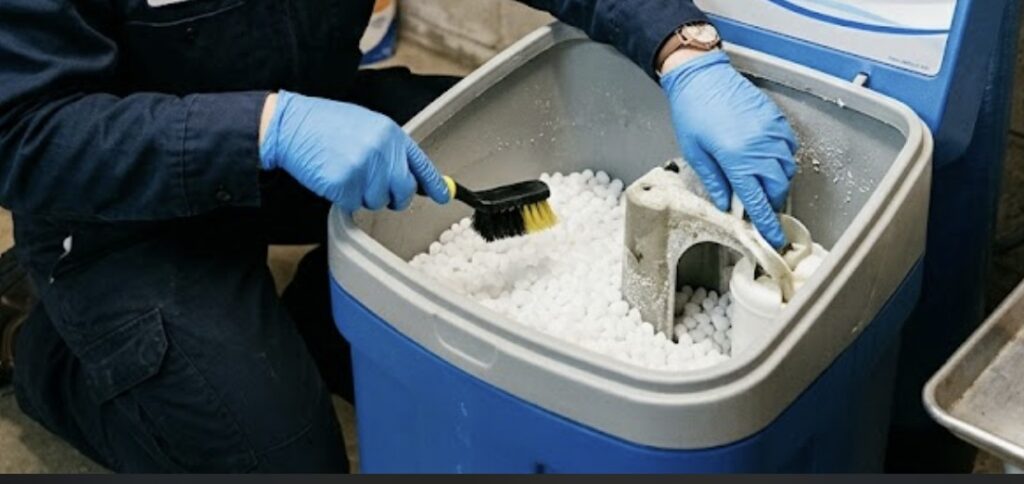
A water softener works by pulling hard minerals out of your water supply through a process called ion exchange. Hard water passes through a tank filled with resin beads that trap calcium and magnesium, replacing them with sodium ions. The system then periodically regenerates, flushing the captured minerals down the drain and recharging the resin with salt from a separate brine tank.
Like any mechanical system, water softeners have components that wear out or malfunction over time. The most common issues include:
- Salt bridges or salt mushing in the brine tank
- Resin beads that are worn out or fouled with iron
- A faulty control valve or timer
- Clogged injectors or venturi valves
- Motor or seal failures in older units
- Leaks from cracked tanks or fittings
Some of these problems are quick and affordable to fix. Others may signal that your unit is nearing the end of its useful life. Knowing the difference is what separates a wise repair from throwing good money after bad.
Signs Your Water Softener Is Worth Repairing
Not every water softener problem means it’s time to shop for a new unit. In many cases, a targeted repair can restore full function and extend the life of your system by several more years. Here are situations where repair usually makes sense:
The Unit Is Relatively New
Most quality water softeners are built to last 10 to 15 years with proper maintenance. If your system is five years old or less and experiencing a specific, isolated issue, like a salt bridge or a stuck valve, repair is almost always the right call. You still have a lot of life left in that unit.
The Problem Is a Known, Low-Cost Fix
Salt bridges are one of the most common softener complaints, and they’re usually easy to clear. A hardened crust of salt forms in the brine tank, preventing the salt from dissolving properly. This can make it seem like your softener isn’t working at all. In most cases, this type of issue is resolved quickly without replacing any parts.
Similarly, a clogged injector or a stuck regeneration cycle can often be corrected with a cleaning or a minor replacement part. When the cost of repair is low relative to the value remaining in the unit, repair wins.
Only One Component Has Failed
Control valves, timers, and seals can fail independently of the rest of the system. If your resin tank is still in good shape and the issue is limited to one component, replacing just that part is often cost-effective. A plumber from Hockers can evaluate the condition of each component separately before making any recommendations.
Signs It Might Be Time to Replace Your Water Softener
There are situations where putting money into repairs doesn’t add up. Hockers believes in giving homeowners honest guidance — and sometimes that means recommending a replacement rather than another band-aid fix.
The Unit Is More Than 12 to 15 Years Old
Older water softeners become increasingly inefficient and prone to recurring failures. If your system is aging out and you’re facing a significant repair bill, the math often works out in favor of investing in a new, more efficient unit. Newer softeners also use less salt and water during regeneration, which can lower your operating costs over time.
Repairs Are Becoming Frequent
If you’ve had your softener serviced multiple times in the past few years, that pattern is telling you something. A system that needs repeated attention is costing you more in service calls than a new unit would cost in the long run. One way to think about it: if annual repair costs are approaching 50 percent of the cost of a new unit, replacement is likely the smarter investment.
The Resin Bed Is Degraded Beyond Recovery
Resin beads can be cleaned and in some cases recharged, but eventually they degrade to a point where they can no longer effectively soften water. If the resin in your unit has been fouled by iron over many years or simply worn out from use, replacing just the resin may not be cost-effective depending on the age and overall condition of the unit.
You’re Experiencing Whole-Home Water Quality Problems
Wisconsin hard water can leave calcium scale buildup inside water heaters, dishwashers, faucets, and supply lines. If your softener has been underperforming for an extended period, you may be dealing with residual scale throughout your plumbing. In that case, upgrading to a new, properly sized softener, combined with a plumbing inspection, is the best path forward.
Repair vs. Replacement: How to Think About the Cost
A useful rule of thumb in the home services industry is the 50 percent rule: if the cost of a repair exceeds 50 percent of what a comparable replacement would cost, replacement is typically the better value, especially for older units.
Here are some general cost considerations to keep in mind:
- Minor repairs (clearing a salt bridge, cleaning an injector): relatively low cost
- Control valve replacement: moderate cost, often worthwhile on a newer unit
- Full resin replacement: moderate to higher cost depending on tank size and unit age
- New water softener installation: varies based on unit size and home plumbing configuration
A technician from Hockers Home Services can walk you through exact costs once they’ve assessed your system. The goal is always to give you a clear picture of what makes the most financial sense for your home and your budget.
Why Hard Water Is Such a Problem in Northeast Wisconsin
Hard water is measured in grains per gallon (GPG). Anything above 7 GPG is considered hard, and many communities in the Green Bay area register well above that threshold. Local groundwater picks up calcium and magnesium as it moves through limestone and dolomite formations common to this region.
Over time, untreated hard water causes:
- Scale buildup inside water heaters, reducing efficiency and lifespan
- Clogged showerheads and faucet aerators
- Dingy laundry and spotty dishes despite heavy detergent use
- Dry skin and hair from bathing in mineral-heavy water
- Premature failure of dishwashers, washing machines, and water-using appliances
A properly functioning water softener eliminates these problems. When yours stops working, even for a few weeks, you may start noticing the effects throughout your home, which is why prompt attention matters.
How to Extend the Life of Your Water Softener
Regular maintenance goes a long way toward preventing the breakdowns that lead to costly repairs or premature replacement. Here are the key habits Wisconsin homeowners should follow:
- Check your salt level monthly and keep the brine tank at least one-third full
- Use high-quality salt — pellets or crystals — to reduce mushing and bridging
- Clean the brine tank once a year to prevent buildup and bacterial growth
- Run a resin cleaner through the system periodically, especially if you have iron in your water
- Have a plumber inspect the unit every couple of years to catch developing issues early
Hockers offers routine plumbing maintenance that includes checking your water softener’s performance. Catching a minor issue before it becomes a major problem is always the most cost-effective approach.
Frequently Asked Questions About Water Softener Repair
How do I know if my water softener is still working?
The most obvious sign is that your water feels hard again, you may notice soap that doesn’t lather well, spots on glassware, or scale around fixtures. You can also test your water hardness with an inexpensive test kit. If your softener is running through salt at a normal rate but your water still tests hard, something isn’t working correctly.
Can I repair a water softener myself?
Some basic tasks, like breaking up a salt bridge or topping off salt, are DIY-friendly. But most repairs involving the control valve, resin bed, or internal plumbing connections require professional knowledge and tools. Attempting these repairs without experience can make the problem worse or void any remaining warranty. It’s usually worth calling Hockers for anything beyond routine salt maintenance.
What is a salt bridge, and how does it form?
A salt bridge is a hardened crust that forms in the brine tank, usually spanning the gap between the salt and the water at the bottom. It can happen due to high humidity, certain types of salt, or overfilling the tank. The bridge prevents salt from dissolving, so the regeneration process doesn’t work properly. You can often diagnose this by pressing down on the salt, if it feels hollow underneath, you likely have a bridge.
How long should a water softener last in Wisconsin?
With proper maintenance, most quality water softeners last 10 to 15 years. Units that handle very hard water or high iron content may experience more wear on the resin bed and work slightly harder than units in areas with moderately hard water. Regular maintenance and prompt attention to problems can help push your system toward the higher end of that range.
Need help fast? Contact Hockers, your trusted Wisconsin home comfort experts. Our team can diagnose your water softener issue, give you honest repair vs. replacement guidance, and get your system back on track quickly.
Why De Pere and Green Bay Homeowners Trust Hockers Home Services
Hockers Home Services has been part of the Northeast Wisconsin community for over 30 years. We’re a family-owned operation, and we approach every service call the way we’d want someone to approach a call at our own home, with honesty, skill, and genuine care.
When it comes to water softeners, we don’t push replacement when a repair will do the job. And when a unit truly has run its course, we’ll tell you that honestly rather than keep billing you for fixes that won’t stick. Our licensed, insured technicians have the experience to assess your system accurately and give you a recommendation you can trust.
We serve homeowners throughout De Pere, Green Bay, Ashwaubenon, Howard, and surrounding Brown County communities. Whether your water softener needs a minor adjustment or a full replacement, Hockers is the team to call.
Schedule service with Hockers Home Services and experience five-star comfort care. We’ve been keeping Wisconsin families comfortable for decades — and we’re ready to help you next.
Hockers Plumbing, Heating, Cooling, & Electrical is proud to offer financing options through Ally!
We understand the wide variety of financial circumstances, and are proud to offer financing options in order to keep your home comfortable, starting today.
LEARN MORE