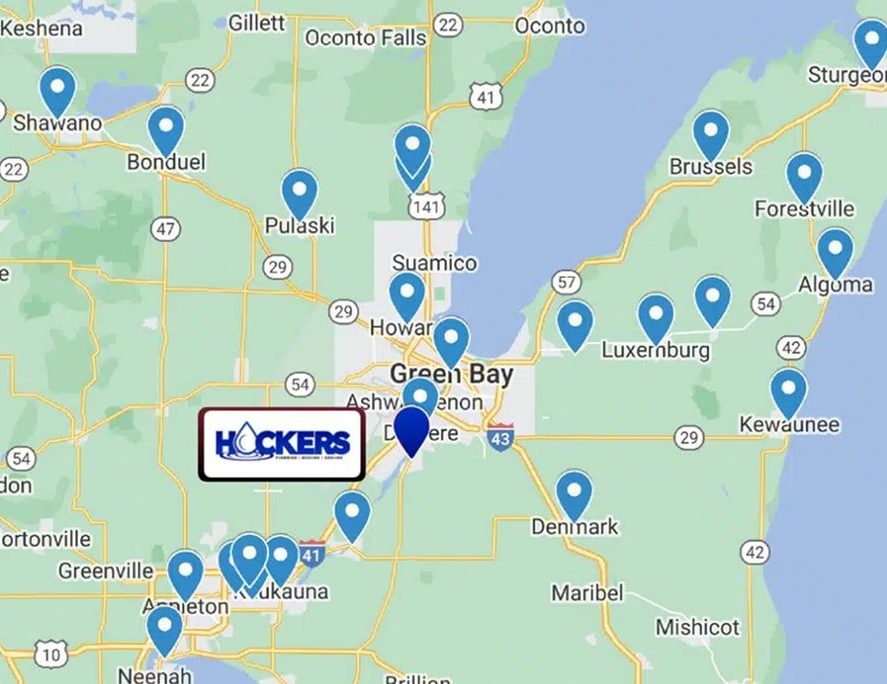


Hockers Home Services is proud to serve De Pere, Green Bay, and Northeast Wisconsin homeowners with reliable plumbing, heating, and cooling solutions designed to keep Wisconsin homes comfortable year-round.
When winter finally loosens its grip, most homeowners are ready for longer days, melting snow, and a fresh start. But beneath your yard, driveway, and foundation, spring thaw can create real plumbing stress. As frozen ground softens and snowmelt moves through the soil, your sewer line can face pressure from shifting earth, rising groundwater, and hidden pipe defects that winter kept out of sight.
Need help fast? Contact Hockers, your trusted Wisconsin home comfort experts.
What Happens to Wisconsin Soil During the Spring Thaw?
Wisconsin winters put soil through a freeze-and-thaw cycle. When temperatures drop, moisture in the ground freezes and expands. When spring temperatures rise, that frozen soil begins to thaw, soften, and shift.
This matters because your sewer line is buried underground. It depends on stable surrounding soil for support. When the soil expands, contracts, becomes saturated, or moves unevenly, it can put pressure on older pipes, pipe joints, and sewer laterals.
Researchers studying cold-weather hydrology note that frozen soil can affect how snowmelt infiltrates the ground and how water runs off or recharges soil layers. For homeowners, that can mean a sudden increase in water around buried plumbing once spring arrives.
Why Is Spring Thaw Hard on Sewer Lines?
Your sewer line is designed to carry wastewater away from your home. It is not designed to handle shifting soil, heavy groundwater pressure, or root movement all at once.
During spring thaw, several things can happen:
- Frozen ground begins to soften unevenly.
- Snowmelt adds moisture to already saturated soil.
- Clay-heavy areas can expand and hold water.
- Groundwater may rise around sewer laterals.
- Older pipe joints may separate slightly.
- Existing cracks may allow water or roots to enter the line.
The Environmental Protection Agency notes that sanitary sewer overflows and sewer system problems can be worsened by infiltration and inflow, including groundwater entering through damaged or leaking service lines.
For Northeast Wisconsin homeowners, that means a sewer line that worked “well enough” all winter may suddenly show signs of trouble in March, April, or May.
What Are the Warning Signs of a Spring Sewer Problem?
Sewer line issues do not always begin with a dramatic backup. Many start with subtle symptoms that homeowners brush off as normal.
Watch for these signs during spring thaw:
- Gurgling toilets or drains
- Slow drains in multiple rooms
- Sewage odors near floor drains or basement plumbing
- Water backing up into a tub, shower, or floor drain
- Wet or sunken patches in the yard
- Unusual grass growth above the sewer line
- Basement drain backups after snowmelt or heavy rain
One slow sink is usually a localized clog. But if several fixtures are draining slowly at the same time, the issue may be deeper in the main sewer line.
Why Does Soil Pressure Damage Sewer Pipes?
Soil may not seem powerful, but it can put steady force on buried pipes. When moisture freezes, expands, and later thaws, the ground does not always return to its exact original position.
That movement can be especially hard on older sewer materials, aging joints, and lines already weakened by tree roots or corrosion.
Common spring-related sewer issues include:
- Cracked pipe sections
- Separated joints
- Low spots, also called “bellies,” where wastewater collects
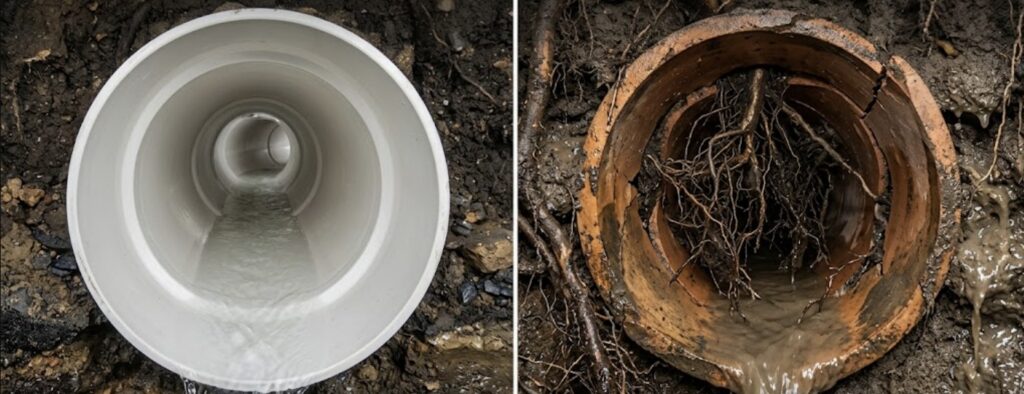
- Root intrusion through softened or damaged joints
- Soil settlement around older pipe runs
- Increased groundwater entering through pipe defects
Once a pipe has a crack or offset joint, debris can catch in that spot. Over time, toilet paper, grease, sediment, and waste build up until the line slows or blocks completely.
Why Are Older Wisconsin Homes at Higher Risk?
Many homes in De Pere, Green Bay, Ashwaubenon, Howard, and surrounding Brown County communities have mature trees, older sewer laterals, and long-established underground plumbing. Those are not automatically problems, but they do require attention.
Older sewer lines may have:
- Clay, cast iron, or aging pipe materials
- Joints that are more vulnerable to root intrusion
- Low spots caused by years of soil movement
- Previous repairs that may not match current standards
- Undetected cracks hidden below the yard
Spring thaw often exposes weak points because the ground is moving, groundwater is active, and household plumbing demand continues as usual.
What Should Homeowners Do Before the Thaw?
The best time to think about your sewer line is before a backup happens.
A simple spring plumbing checklist can help:
- Pay attention to slow drains throughout the home.
- Avoid flushing wipes, hygiene products, or paper towels.
- Keep fats, oils, and grease out of kitchen drains.
- Check basement floor drains for odors or slow drainage.
- Make sure downspouts direct water away from the foundation.
- Know where your sewer cleanout is located.
- Schedule drain cleaning or camera inspection if problems repeat.
If you had drain trouble last spring, don’t wait for the same issue to return. Recurring clogs are often a sign that your main line needs professional drain cleaning and inspection.
How Can a Sewer Camera Inspection Help?
A sewer camera inspection gives a plumber a clear look inside your sewer line. Instead of guessing, Hockers can inspect the pipe and identify what is actually causing the problem.
A camera inspection may reveal:
- Tree root intrusion
- Cracked or collapsed pipe sections
- Grease buildup
- Soil or sediment inside the line
- Pipe bellies
- Offset joints
- Foreign objects
- Signs of aging or deterioration
This helps homeowners make informed decisions. Sometimes the solution is drain cleaning. Other times, the inspection shows that repairs are needed to prevent repeated backups.
When Is Drain Cleaning Enough?
Drain cleaning may be enough when the pipe is structurally sound but blocked by debris, grease, roots, or buildup.
Professional drain cleaning can restore flow and reduce the chance of another immediate clog. For stubborn sewer line blockages, Hockers may recommend advanced cleaning methods based on the condition of the pipe and the type of obstruction.
However, if the camera shows a broken, collapsed, or severely offset pipe, cleaning alone may not solve the underlying issue. In those cases, Hockers will explain the options clearly so you understand what is necessary and what can wait.
Schedule service with Hockers Home Services and experience five-star comfort care.
Why DIY Sewer Cleaning Can Make Things Worse
A small sink clog is one thing. A main sewer problem is different.
Chemical drain cleaners can damage older plumbing and rarely solve deep sewer line issues. Store-bought augers may punch a temporary hole through a clog without clearing the full pipe. Worse, aggressive DIY tools can get stuck or damage fragile pipe materials.
Professional plumbers have the right equipment to diagnose the issue safely. They also know when a line should be cleaned, inspected, repaired, or replaced.
What Makes Hockers the Right Local Team?
Hockers Home Services is based in De Pere and serves homeowners across Green Bay and Northeast Wisconsin. The team understands local soil conditions, seasonal plumbing patterns, and the way Wisconsin weather affects buried sewer lines.
Homeowners choose Hockers because they want:
- Friendly, neighborly service
- Licensed and insured technicians
- Straightforward recommendations
- Quality workmanship
- Responsive customer care
- A local team with decades of experience
Hockers is not a national chain. It is a local home plumbing services team built around craftsmanship, honesty, and long-term relationships with Wisconsin homeowners.
Frequently Asked Questions About Spring Sewer Problems
Can spring thaw really cause a sewer backup?
Yes. Spring thaw can increase groundwater pressure, soften soil, and expose weak points in a sewer line. If the pipe already has roots, cracks, low spots, or buildup, the seasonal change can trigger a backup.
Are sewer problems more common after snow melts?
They can be. Snowmelt adds moisture to the ground, and frozen or saturated soil can change how water moves around your home. That added moisture can stress older sewer laterals or enter through damaged joints.
What should I do if my basement drain backs up?
Stop using water if possible and call a professional plumber. A basement drain backup may indicate a main sewer line blockage, especially if toilets, tubs, or other drains are also acting up.
How often should I schedule sewer inspection?
If you have recurring drain issues, mature trees near the sewer line, or an older home, a camera inspection can be a smart preventive step. Hockers can help determine the right timing based on your home and symptoms.
Protect Your Home Before the Next Thaw
Spring in Wisconsin should feel like a relief, not a plumbing emergency. If you notice slow drains, sewer odors, gurgling fixtures, or basement backups, do not wait for the problem to get worse.
Call Hockers Home Services today for reliable plumbing service in De Pere, Green Bay, and Northeast Wisconsin. Hockers is ready to help you protect your home from spring thaw sewer problems with expert drain cleaning, sewer inspection, and trusted local care.
Hockers Plumbing, Heating, Cooling, & Electrical is proud to offer financing options through Ally!
We understand the wide variety of financial circumstances, and are proud to offer financing options in order to keep your home comfortable, starting today.
LEARN MORE